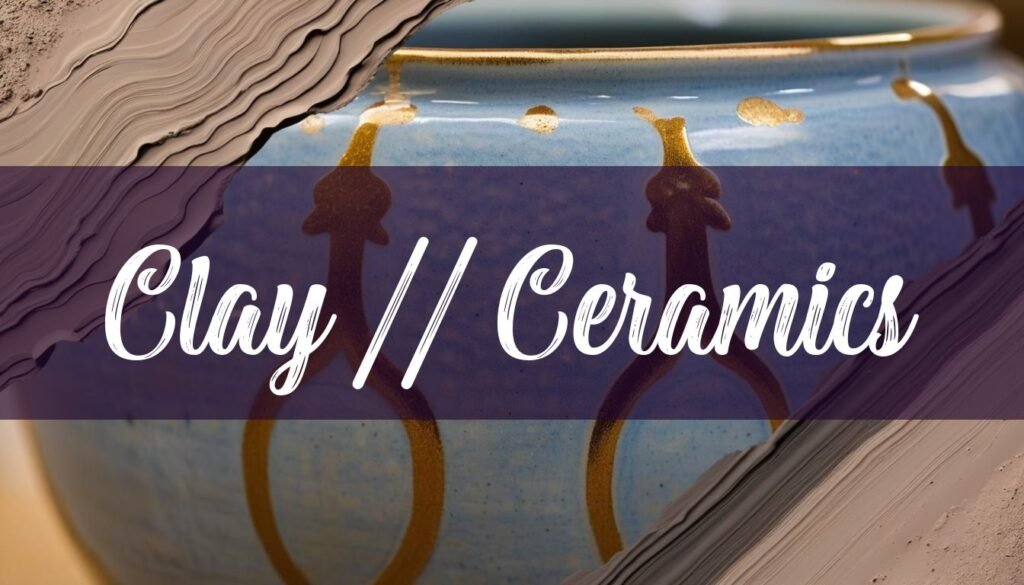
In the world of ceramics, the choice of clay is paramount, influencing not only the aesthetic but also the functional properties of the final piece. From the earliest earthenware vessels to the most delicate porcelain sculptures, clay has been the foundational material, shaped by human hands and fired in kilns to create objects of beauty and utility. Understanding the different types of clay and their unique characteristics is essential for both beginner potters and seasoned ceramicists alike. The predominant types are earthenware, stoneware, and porcelain, each possessing distinct properties that make them suitable for different applications. For more information, you might want to check out this guide to clay.
Exploring the Primary Types of Ceramic Clay
Earthenware clay, often considered the earliest form of clay used by potters, is characterized by its high plasticity and ease of manipulation. Its composition, rich in iron and other mineral impurities, contributes to its unique properties, including its porous nature when fired at lower temperatures. You can read more here about why this happens. Typically maturing between 950°C and 1,100°C (1,745°F and 2,012°F), earthenware is an excellent choice for beginner potters due to its forgiving nature and workability. This clay is often used for sculpting, hand-building, and wheel throwing, making it suitable for creating decorative items like terracotta pots, ornamental objects, and ceramic jewelry dishes. For those interested in making small items, you may want to learn how to make mini pottery.
Although earthenware is less versatile and more fragile than other clay types once fired, its ability to accommodate various glazes and its vibrant colors make it a popular choice for artistic expression. To render it impervious to liquids, earthenware is often coated with a ceramic glaze, making it suitable for items that hold food and liquids, such as bowls and plates. Head to Seattle Pottery Supply to see examples of this.
Stoneware clays, known for their durability and versatility, offer a sturdier alternative to earthenware. These clays, which appear white or gray when water is added, contain mineral impurities like silica, feldspar, ball clay, and quartz. Stoneware is typically fired at a higher temperature range, between 1000°C and 1380°C, which results in a stone-like, durable product. This makes it suitable for practical applications requiring longevity, such as dinner plates, vases, bakeware, cookware, tiles, and flooring. Unlike earthenware, stoneware is not porous, making it ideal for holding liquids and foodstuffs without requiring additional glazing. The clay’s ability to withstand heat also makes it microwave and oven-safe.
Potters can easily work with stoneware and paint it with underglazes, glazes, overglazes, and enamels, making it a versatile choice for both hand-building and wheel throwing.
Porcelain, often considered the most refined of ceramic clays, is highly sought after for its delicate appearance, elegant finish, and translucence when fired at high temperatures. Known sometimes as kaolin, porcelain clay is almost purely made up of kaolin clay, with occasional amounts of quartz and feldspar. It typically fires to a bright white color and can withstand extremely high temperatures, making it non-porous and very hard. Firing porcelain gives it a glass-like appearance, and it is often fired more than once to achieve different finishes.
There are three types of porcelain ceramics: hard-paste, soft-paste, and bone china. Hard-paste, or “true” porcelain, is the most common type and is fired at very high temperatures. Bone china is the strongest kind of porcelain, very resistant to chip damage, and usually produces a white or translucent result. Common items made with porcelain clay include dinnerware, figurines, sculptures, tiles, sinks, basins, and even architectural items. However, porcelain can be challenging to work with, requiring skill and experience due to its fine texture and tendency to warp or crack. Those looking to work with porcelain may want to read how to make porcelain pottery.
Modifying Clay Properties and Firing Temperatures
To tailor clay for specific ceramic techniques, various additives and processes are employed to modify its properties. For instance, ball clay, known for its plasticity and fine particle size, is often mixed with other clays to enhance workability and add strength to the finished pieces. Similarly, fire clay, with its extremely high firing range, is used to increase heat resistance in pottery products such as bricks for kilns and ovens. Air-dry clay, on the other hand, hardens naturally without the need for firing, making it suitable for sculptures, miniature figures, and craft projects.
Understanding the required firing temperatures is crucial for achieving the desired hardness, durability, and finish for each clay type. Earthenware typically reaches maturity between 1745°F (950℃) and 2012°F (1100℃), while stoneware is fired at temperatures ranging from 2,100°F to 2,400°F. Porcelain, requiring the highest temperatures, is generally fired between 2381°F and 2455°F.
The choice of clay in ceramics is a foundational decision, influencing the final outcome of every piece. Whether one opts for the forgiving nature of earthenware, the durability of stoneware, or the refined elegance of porcelain, understanding the properties and ideal applications of each clay type is essential for successful ceramic creations. By exploring and experimenting with different clays, both novice and experienced ceramicists can unlock new artistic possibilities and achieve their creative goals.