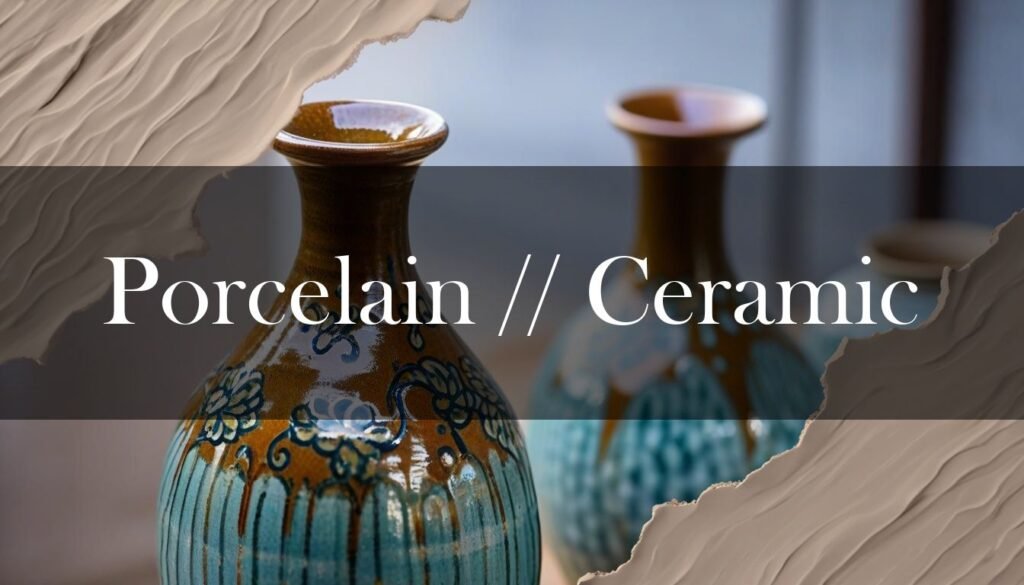
Porcelain vs. Ceramic: Which is More Durable?

Porcelain vs. Ceramic: Which is More Durable?

When it comes to the world of pottery, a question that often bubbles to the surface is: “Which is more durable, porcelain or ceramic?” It’s a fantastic question, really, because the answer dives right into the heart of what makes each type of pottery unique. Both porcelain and ceramic have their own special qualities and uses, but understanding their fundamental differences is key to figuring out which one stands up best to the test of time.

Ceramic, in its broadest sense, includes a vast array of pottery types, from earthenware to stoneware. The firing temperatures for these ceramics usually range from about 1,650°F to 1,945°F (900°C to 1,060°C) for bisque firing – the initial firing that prepares the clay for glazing. During this process, the clay undergoes significant changes. For example, firing at cone 06 (1,828°F or 998°C) typically results in a more porous piece, while firing at cone 04 (1,945°F or 1,060°C) leads to a denser ceramic. Each clay type—earthenware, stoneware, and porcelain—responds uniquely to these temperatures. Earthenware is generally bisque fired around 1,830°F (999°C), stoneware between 1,800°F and 2,230°F (982°C to 1,210°C), and porcelain often at the higher end, around 2,230°F (1,210°C). These temperatures help transform the raw clay into a more durable ceramic material.

Porcelain, on the other hand, is a specific type of ceramic known for its delicate beauty and translucency. What makes porcelain particularly strong is its composition and the high temperatures at which it’s fired. These temperatures can reach upwards of 2,300°F (around 1260°C), causing the materials to vitrify, creating a dense, non-porous, and incredibly hard final product. The addition of materials like feldspar and bone ash act as fluxes, aiding in the vitrification process and enhancing the porcelain’s translucency and strength. Silica is also added to increase the strength and thermal shock resistance of porcelain. It’s this vitrification process that gives porcelain its edge in durability.

In practical terms, porcelain is generally more resistant to wear and tear than other types of ceramics. Its density makes it less prone to chipping and scratching, which is why it’s often used for high-end tableware. However, it’s worth noting that the durability of any ceramic piece also depends on how it’s used and cared for. While porcelain might be tougher, a sudden impact can still cause it to break. Meanwhile, a well-fired stoneware piece can be incredibly robust and perfectly suited for everyday use. Also, understanding the shrinkage rates, which range from 5-8% for earthenware, 10-13% for stoneware, and 12-15% for porcelain, helps potters manage the clay effectively during drying and firing. Ultimately, the choice between porcelain and other ceramics depends on the intended use, the desired aesthetic, and, of course, personal preference.

Leave a Comment

Your email address will not be published. Required fields are marked *

We use cookies to analyse our traffic. It helps us understand who visits our site and what kind of content they want to see. View more
Cookies settings
Accept
Privacy & Cookie policy
Privacy & Cookies policy
Cookie name Active

Who we are

Suggested text: Our website address is: http://potterygeek.com.

Comments

Suggested text: When visitors leave comments on the site we collect the data shown in the comments form, and also the visitor’s IP address and browser user agent string to help spam detection. An anonymized string created from your email address (also called a hash) may be provided to the Gravatar service to see if you are using it. The Gravatar service privacy policy is available here: https://automattic.com/privacy/. After approval of your comment, your profile picture is visible to the public in the context of your comment.

Media

Suggested text: If you upload images to the website, you should avoid uploading images with embedded location data (EXIF GPS) included. Visitors to the website can download and extract any location data from images on the website.

Cookies

Suggested text: If you leave a comment on our site you may opt-in to saving your name, email address and website in cookies. These are for your convenience so that you do not have to fill in your details again when you leave another comment. These cookies will last for one year. If you visit our login page, we will set a temporary cookie to determine if your browser accepts cookies. This cookie contains no personal data and is discarded when you close your browser. When you log in, we will also set up several cookies to save your login information and your screen display choices. Login cookies last for two days, and screen options cookies last for a year. If you select "Remember Me", your login will persist for two weeks. If you log out of your account, the login cookies will be removed. If you edit or publish an article, an additional cookie will be saved in your browser. This cookie includes no personal data and simply indicates the post ID of the article you just edited. It expires after 1 day.

Embedded content from other websites

Suggested text: Articles on this site may include embedded content (e.g. videos, images, articles, etc.). Embedded content from other websites behaves in the exact same way as if the visitor has visited the other website. These websites may collect data about you, use cookies, embed additional third-party tracking, and monitor your interaction with that embedded content, including tracking your interaction with the embedded content if you have an account and are logged in to that website.

Who we share your data with

Suggested text: If you request a password reset, your IP address will be included in the reset email.

How long we retain your data

Suggested text: If you leave a comment, the comment and its metadata are retained indefinitely. This is so we can recognize and approve any follow-up comments automatically instead of holding them in a moderation queue. For users that register on our website (if any), we also store the personal information they provide in their user profile. All users can see, edit, or delete their personal information at any time (except they cannot change their username). Website administrators can also see and edit that information.

What rights you have over your data

Suggested text: If you have an account on this site, or have left comments, you can request to receive an exported file of the personal data we hold about you, including any data you have provided to us. You can also request that we erase any personal data we hold about you. This does not include any data we are obliged to keep for administrative, legal, or security purposes.

Where your data is sent

Suggested text: Visitor comments may be checked through an automated spam detection service.
Save settings
Cookies settings